

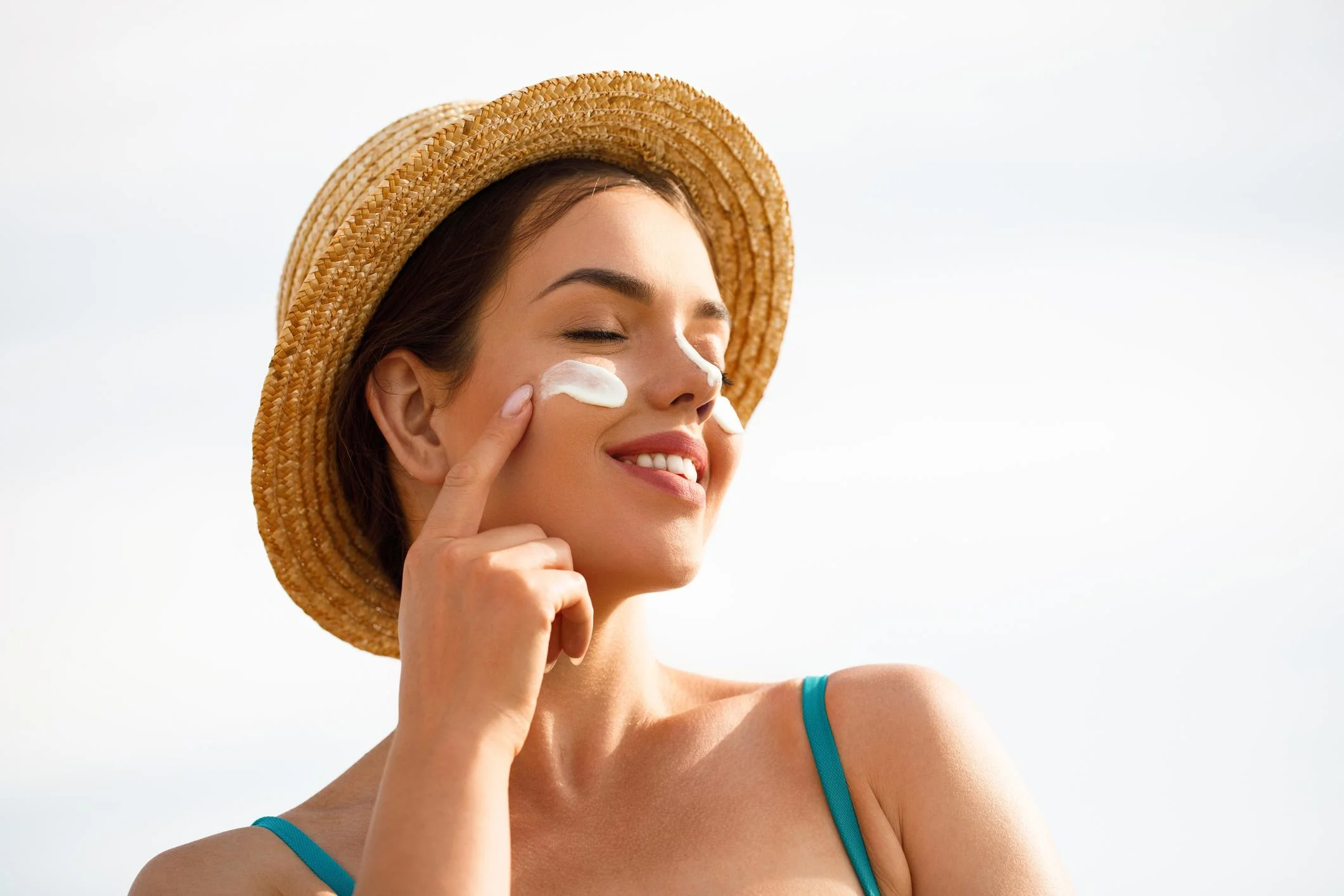
Why Everyday Protection Matters
Ultraviolet (UV) radiation from the sun reaches the skin throughout the year — on cloudy days, in winter, and through window glass. Because of this, sun protection is described by organisations such as the American Academy of Dermatology (AAD) as a daily habit rather than a summer-only one.
The general aim is not to avoid the outdoors. Time outside supports mood, movement, and everyday wellbeing. The point is to reduce the amount of unprotected UV exposure over time.
SPF and Broad Spectrum
Two terms come up most often on sunscreen labels:
- SPF (Sun Protection Factor) refers mainly to protection against UVB rays — the ones most associated with sunburn.
- Broad spectrum means the product also protects against UVA rays, which are associated with skin ageing and deeper skin changes.
AAD generally recommends a broad-spectrum sunscreen with SPF 30 or higher for everyday use. The specific number matters less than applying it regularly and using enough of it.
Everyday Habits
Sunscreen works best when it is applied consistently, not perfectly:
- Apply in the morning to face, neck, and hands — the areas most often exposed.
- Reapply during longer time outdoors, particularly in strong sun or after swimming or sweating.
- Do not skip cloudy days. UV rays pass through cloud cover.
- Remember winter. Snow and reflective surfaces can increase UV exposure.
- Choose a texture you will actually use. A lighter formula worn daily is more useful than a heavy one that is skipped.
A practical note: most people apply less sunscreen than the amount used in testing. Applying generously, and reapplying during longer outdoor time, matters more than choosing a specific brand.
Beyond Sunscreen
Sunscreen is not the only form of protection. Other measures can reduce exposure:
- Clothing. Long sleeves, trousers, and wide-brimmed hats cover more than sunscreen alone.
- Shade. Sitting under a tree, an awning, or a parasol during the middle of the day.
- Timing. When practical, limiting time in strong midday sun.
- Sunglasses. Useful for the eyes and the skin around them.
If you notice new or changing skin marks, or if you have a personal or family history of skin concerns, it is worth speaking with a qualified dermatologist rather than relying on self-care alone.
A Short Summary
Sun protection is an everyday habit rather than a summer one. A broad-spectrum sunscreen with SPF 30 or higher, applied to exposed skin and reapplied during longer time outdoors, is the core of it. Clothing, shade, and timing add further protection. New or changing skin marks are worth discussing with a dermatologist.
Further Reading
- Building a Simple Skin-Care Routine — where sunscreen fits.
- Reading Skin-Care Labels Without the Hype — understanding SPF and PAO.
- Making Space for Personal Care in a Busy Week — fitting routines into real life.
- Beauty & Self-Care — the section on skin, sun, and personal rituals.
Sources
- American Academy of Dermatology (AAD) — sunscreen and sun protection guidance.
- Centers for Disease Control and Prevention — general UV protection information.
- Office on Women's Health — everyday skin and sun care information.