

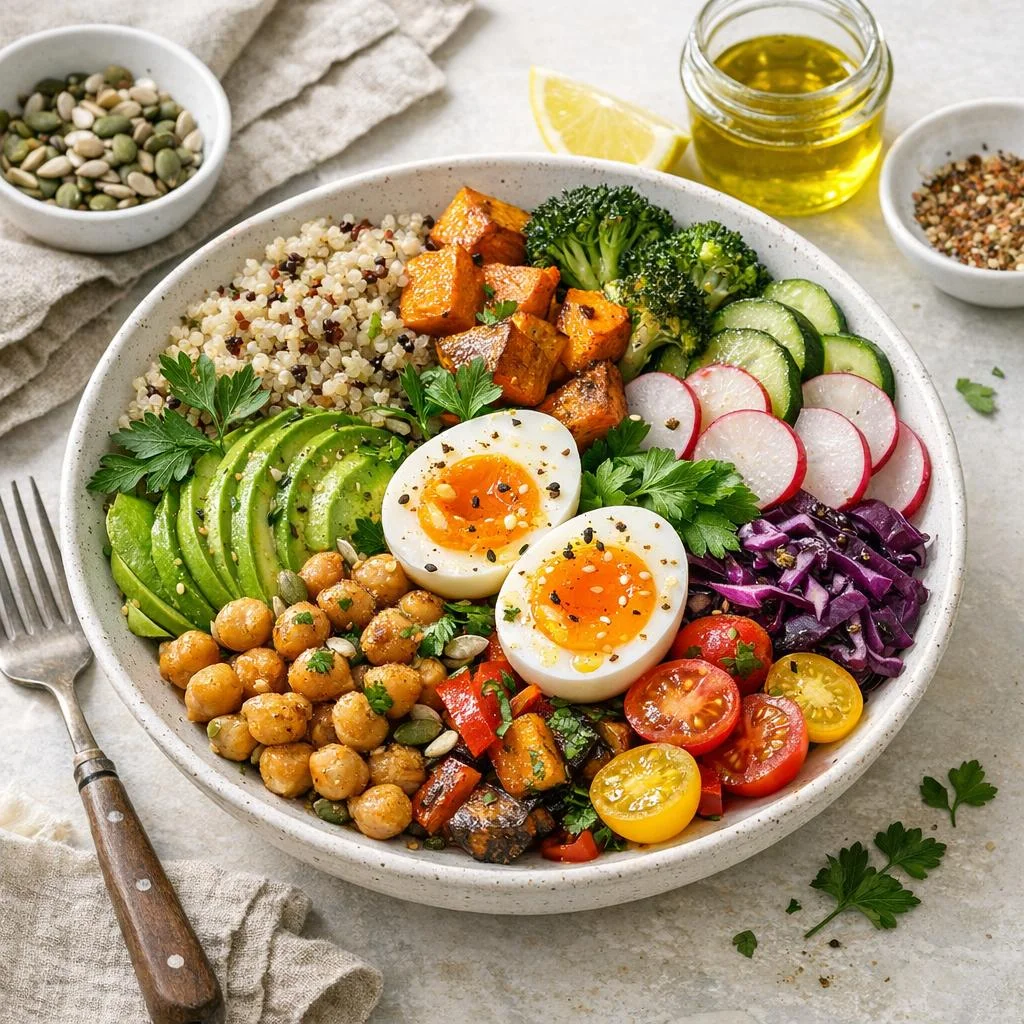
What "Balanced" Means in Practice
A balanced meal is one that contains a few different kinds of food, in amounts that leave you feeling steady rather than hungry or overly full an hour later. There is no single correct formula, and no requirement to count anything.
In practice, most balanced meals include a source of protein or another filling element, some vegetables or fruit, a starch or grain, and something that makes the meal enjoyable.
Everyday Components
Thinking in components is easier than thinking in numbers. A few examples:
Something substantial
- Eggs, beans, lentils, fish, poultry, tofu, or dairy.
Vegetables or fruit
- Fresh, frozen, or cooked. Any form counts and any amount is worth including.
A starch or grain
- Bread, rice, pasta, potatoes, oats, or another grain.
Something you enjoy
- A sauce, a seasoning, a small treat. Pleasure is part of the meal, not separate from it.
Simple Examples
Everyday meals that fit this pattern:
- Oats with milk or yoghurt, fruit, and a spoon of nuts.
- Wholegrain toast with eggs and a side of tomatoes.
- Rice bowl with beans, roasted vegetables, and a sauce.
- Pasta with a simple tomato sauce and a handful of grated cheese.
- Soup with bread and a piece of cheese or an egg.
- Yoghurt with fruit and a slice of toast.
None of these are "perfect". They are ordinary meals that contain more than one kind of food.
A note on balance over time: not every meal needs to be balanced in the same way. Looking at the day or the week as a whole is often more realistic than trying to get every individual meal right.
Keeping It Flexible
Appetite, energy, and circumstances vary. Some days call for a simple meal; other days call for something more involved. A few ways to keep balance flexible:
- Use what is available. Frozen vegetables, tinned beans, and eggs are often enough.
- Adjust portion sizes to your appetite. There is no fixed amount that suits everyone.
- Let preferences matter. A meal you enjoy is more likely to be repeated.
- Keep a few easy options at home. Oats, bread, eggs, yoghurt, and frozen vegetables make a balanced meal quicker.
A Short Summary
Balanced meals are built from familiar components: something substantial, some vegetables or fruit, a starch or grain, and something you enjoy. No counting is required, and no single meal needs to be perfect. Balance is easier to see across a day or a week than within every plate.
Further Reading
- Hydration Habits for Everyday Life — simple drinking routines.
- Understanding Fiber on Food Labels — reading labels calmly.
- Planning a Flexible Grocery List — stocking everyday basics.
- Food & Nourishment — the section on meals, hydration, and labels.
Sources
- Office on Women's Health — everyday nutrition guidance for adult women.
- Centers for Disease Control and Prevention — general healthy eating information.
- National Institutes of Health — basic nutrition information.