

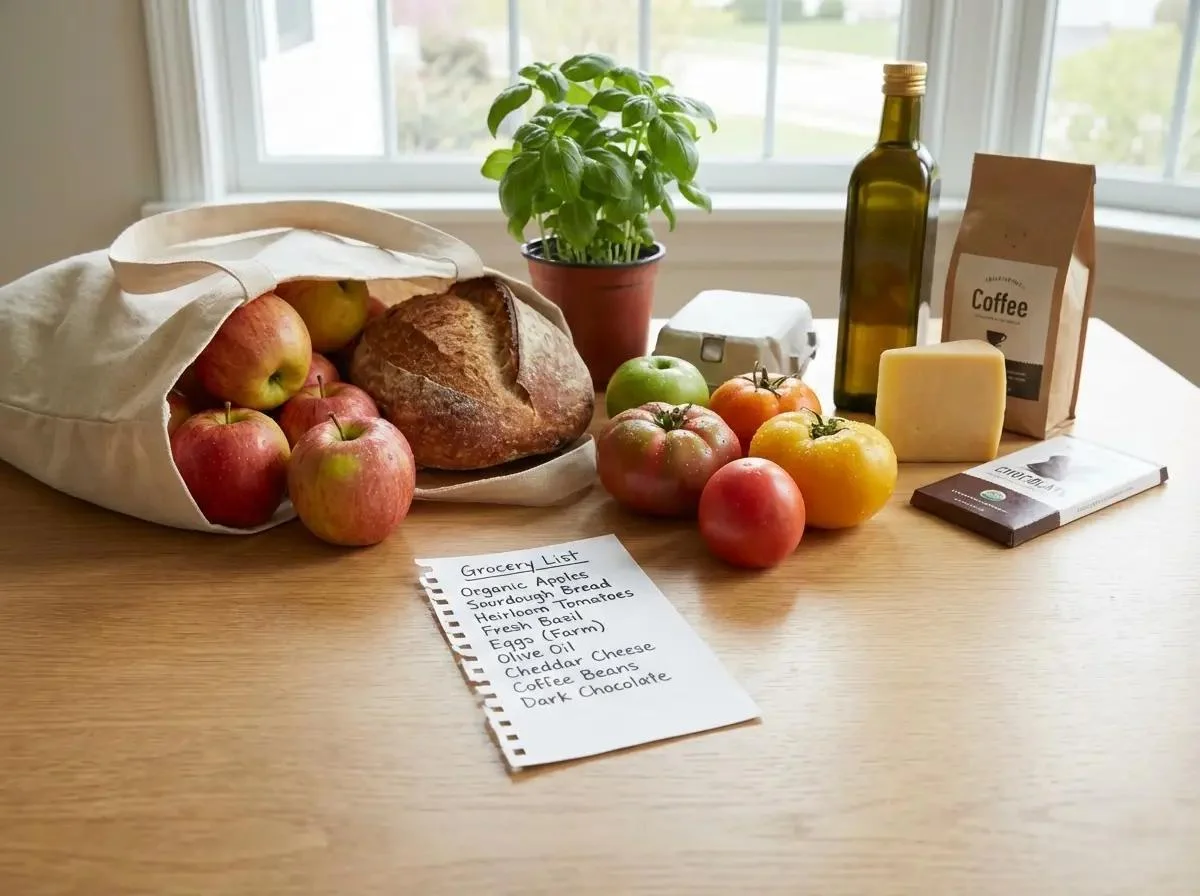
The Idea Behind a Flexible List
A rigid list — meals planned to the letter, specific ingredients for specific days — works well for some people and poorly for others. A flexible list covers the same ground with more room:
- It includes categories rather than exact meals.
- It has enough for several possibilities, not one plan.
- It leaves space for what is fresh, on offer, or appealing on the day.
Everyday Basics
Many kitchens run more smoothly with a small set of everyday basics. The exact list depends on preferences, but a common set includes:
Something substantial
- Eggs, tinned beans, lentils, or frozen fish.
- Yoghurt, milk, or a dairy alternative.
Vegetables and fruit
- Frozen vegetables or a mixed bag.
- Onions, carrots, and one or two fresh vegetables.
- Fruit that keeps well — apples, oranges, or bananas.
Starches
- Bread, oats, rice, pasta, or potatoes.
Extras that help
- Olive oil, tinned tomatoes, and a favourite sauce or spice.
- Nuts, seeds, or something small for snacks.
Building Around the Week
It helps to look at the week and mark the days that are unusual:
- Evenings when you will be home late.
- Days with guests or family meals.
- Days that are usually simple, and days that call for something more involved.
A list that matches the shape of the week is easier to follow than one that assumes every evening will be the same.
One useful habit: keep a running note of what runs out. A small list on the fridge or in a phone note avoids the sudden realisation that something essential is missing.
Adjusting as You Go
A list is a starting point, not a contract. If something is unavailable, replace it with something similar. If a planned meal no longer appeals, use the ingredients for something else. Few kitchens need a rigid plan to work well.
If a week goes badly, the list is still useful — the basics are still in the kitchen. The point of a flexible list is to reduce friction, not to add it.
A Short Summary
A flexible grocery list covers the everyday basics — something substantial, vegetables and fruit, a starch, and a few extras — without locking you into specific meals. Building it around the shape of the week and adjusting as you go makes it a helpful tool rather than another plan to fall short of.
Further Reading
- Building Balanced Meals from Everyday Foods — putting meals together simply.
- Hydration Habits for Everyday Life — simple drinking routines.
- Understanding Fiber on Food Labels — reading packaging calmly.
- Food & Nourishment — the section on meals, hydration, and labels.
Sources
- Office on Women's Health — everyday nutrition guidance for adult women.
- Centers for Disease Control and Prevention — general healthy eating information.