

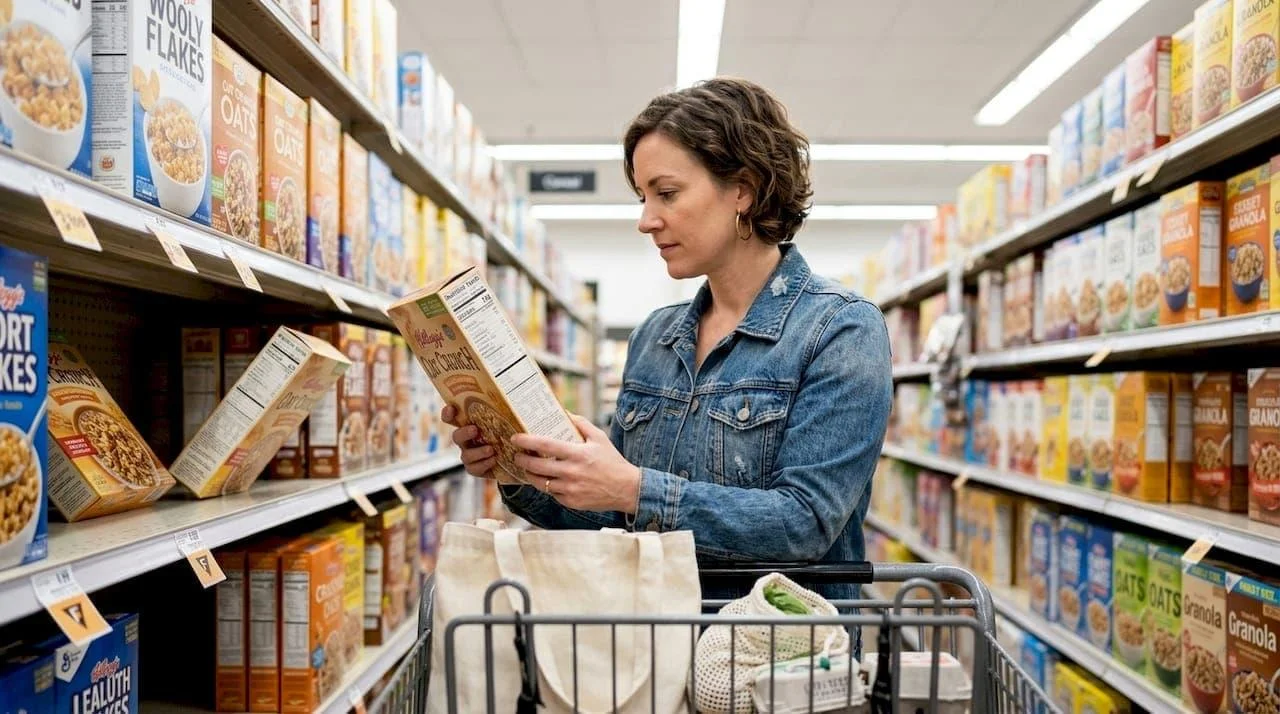
What Fiber Is
Fiber is a part of plant foods that the body does not fully break down. It is found in vegetables, fruit, whole grains, beans, lentils, nuts, and seeds. Fiber supports digestion and often comes alongside foods that feel satisfying.
There are different types of fiber, and they behave in different ways in the body. Most everyday guidance does not require distinguishing between them — including a variety of fiber-rich foods across the week is a reasonable approach.
Where It Appears on a Label
On packaged foods, fiber is usually listed in the nutrition panel, sometimes under "carbohydrates". A few practical points:
- "Dietary fiber" is the most common label term. It refers to the fiber content of the product.
- Serving size matters. The number given applies to the stated serving, not the whole package.
- Whole grains do not always mean high fiber. Some products labelled "wholegrain" contain relatively little fiber. The label panel is the reference.
- Absence of a number does not mean absence of fiber. Fresh vegetables, fruit, and many unprocessed foods are not required to carry a fiber count.
Everyday Sources
Fiber is easiest to include when it is part of the everyday plate:
- Oats, wholegrain bread, brown rice, and wholewheat pasta.
- Beans, lentils, and chickpeas.
- Vegetables — fresh, frozen, or cooked.
- Fruit, with the skin where appropriate.
- Nuts and seeds.
Increasing fiber gradually is usually kinder to the body than a sudden change. Water intake matters here too, as fiber works best with enough fluid.
A note on increases: if you notice discomfort after adding a lot of fiber quickly, the usual advice is to slow down and increase the amount over a longer period, rather than to stop entirely.
Reading Without Overthinking
It is not necessary to count grams. A useful approach is to notice whether fiber-rich foods appear across the day, and to look at labels mainly to compare similar products:
- Compare like with like. Two similar breads, two similar cereals, two similar crackers.
- Read the ingredients list. If a whole grain or a bean appears near the top, the product is more likely to contribute fiber.
- Remember the limits of labels. They are a partial picture. Foods eaten fresh and unprocessed rarely carry a label at all.
A Short Summary
Fiber is found in plant foods and appears on many food labels as "dietary fiber". It is not necessary to count grams — including fiber-rich foods across the day is enough, and labels are most useful for comparing similar products. Increasing fiber gradually, alongside enough fluid, is usually kinder than a sudden change.
Further Reading
- Building Balanced Meals from Everyday Foods — putting meals together simply.
- Hydration Habits for Everyday Life — fluid alongside fiber.
- Planning a Flexible Grocery List — stocking fiber-rich basics.
- Food & Nourishment — the section on meals, hydration, and labels.
Sources
- Office on Women's Health — general nutrition and fiber information.
- National Institutes of Health — overview material on dietary fiber.
- Centers for Disease Control and Prevention — guidance on fiber in everyday eating.